When the Music Does the Talking: Five Scores That Carry Entire Films
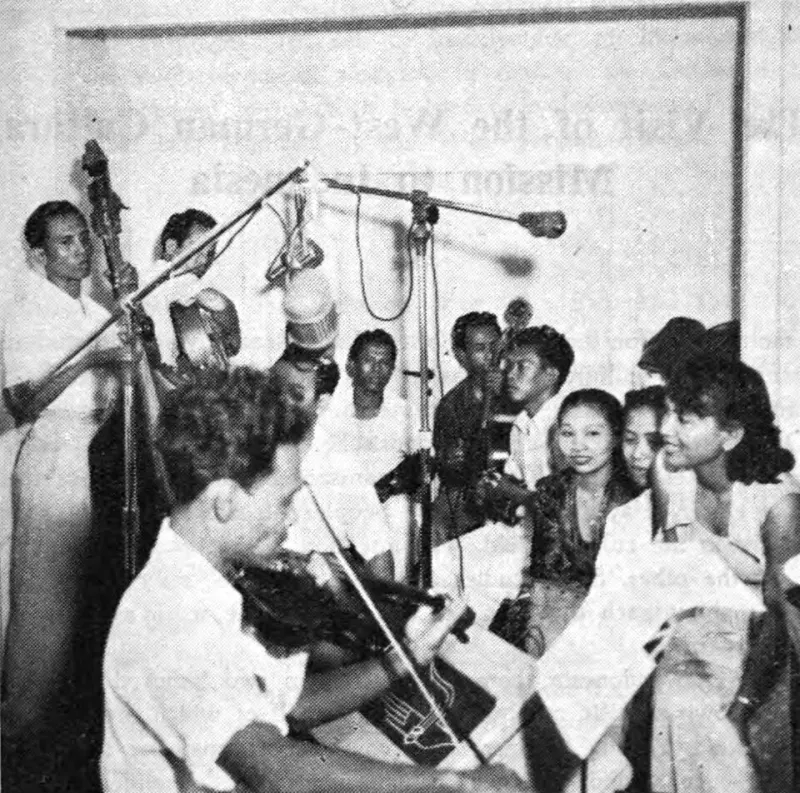
Photo: Unknown authorUnknown author, Attribution, via Wikimedia Commons
Mute almost any great film scene and it still works. The acting reads through the eyes, the blocking tells you who holds the power, the framing does the rest. But every so often you hit a scene where the score isn't decoration — it's the actual storyteller. Cut the music and the moment doesn't just weaken. It collapses.
These are five of my favorite examples of scores doing the heavy lifting, plus a scene from each where you can test my theory yourself. Try it. Mute the TV during the moment I describe and watch the whole thing fall apart like a soufflé in a slammed oven door.
1. Up — Michael Giacchino, 'Married Life'
The famous four-minute montage of Carl and Ellie's life together contains almost no dialogue. It doesn't need any. Giacchino's waltz — a simple, slightly wobbly theme in 3/4 time — does everything: the courtship, the savings jar, the miscarriage, the growing old. When Ellie's chair sits empty in the final shot, the music thins to a single piano figure, and that's where the film quietly guts you.
Remove the score and you're watching a well-animated slideshow. With it, you have maybe the most efficient emotional education in animation history. Every Pixar film since has been chasing this sequence, and honestly, so has every composer.
2. Jaws — John Williams, the main theme
The most famous two notes in cinema. Here's the thing people forget: for most of Jaws, the shark barely appears. The mechanical shark famously malfunctioned, and Spielberg turned a production disaster into the greatest suspense strategy ever — we don't see the monster, we hear it.
The scene at the beach where the little boy on the lilo disappears? On mute, it's people splashing. With Williams' accelerating motif underneath, it's primal dread. The score is the shark. Every horror composer since owes those two notes rent.
3. Guardians of the Galaxy — the needle-drop arsenal
Sometimes the heavy lifting isn't orchestral. James Gunn's entire franchise is built on a fictional mixtape, and the best example is the opening of the first film: Chris Pratt's Peter Quill dancing through an alien cave, lip-syncing to 'Come and Get Your Love,' using a lizard-rat creature as a microphone.
Without the song, the scene is a grown man goofing off in a CG environment. With it, we learn everything about who Quill is in ninety seconds — the homesickness, the armor of humor, the grief he's dancing on top of. The needle drop isn't seasoning here; it's characterization.
4. Her — Arcade Fire and Owen Pallett
Spike Jonze's near-future romance hums along on a score co-written by Arcade Fire's Win Butler and composer Owen Pallett, and it does something sneaky: it makes you forget the central relationship is with an operating system. The warm, humming synth textures treat Theodore's feelings as real because the music treats them as real.
The scene where Theodore and Samantha's relationship is at its most fragile — scored with that aching, breathless theme — would play as a man arguing with his phone without the music's emotional endorsement. The score is the film's argument that this love counts.
5. Aftersun — the 'Under Pressure' moment
Charlotte Wells' debut builds to a karaoke scene where Paul Mescal's Calum sings Queen and David Bowie's 'Under Pressure' to his eleven-year-old daughter, and it's one of the most devastating uses of a pop song I've seen in years. The lyrics — 'Why can't we give love one more chance?' — do the work that the characters can't do out loud.
It's a needle drop, but it's also a thesis. The whole film is about things left unsaid between a father and daughter, and for three minutes, the song says them.
Your Heavy-Lifting Playlist
Queue these up for your next drive:
- 'Married Life' — Michael Giacchino (Up)
- Main Theme — John Williams (Jaws)
- 'Come and Get Your Love' — Redbone (Guardians of the Galaxy)
- 'Photograph' and the score suite — Arcade Fire & Owen Pallett (Her)
- 'Under Pressure' — Queen & David Bowie (Aftersun)
Honorable mentions that just missed the cut: the Interstellar organ work, Ennio Morricone's The Mission, and that Bridgerton-style string quartet cover trend that proves we'll turn almost anything emotional if the strings are right.
The next time a scene gets you, do the mute test. If the moment dies without the music, tip your hat to the person in the orchestra pit — or the studio booth — because they just did the acting nobody put in the credits.