So What Does a Gaffer Do, Anyway? A Field Guide to the End Credits
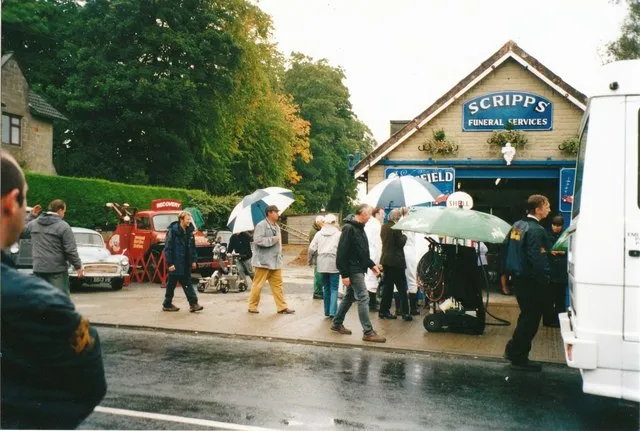
Photo: Eric Rosie, CC BY-SA 2.0, via Wikimedia Commons
I started writing this guide in, of all places, a theater lobby in Albuquerque. I'd driven out to see a revival screening at the KiMo, a gorgeous old Pueblo Deco movie palace from 1927, and ended up chatting with a retired crew member who'd spent thirty years in film production. I mentioned I loved the credits — I'm one of those people who stays until the end — and she laughed and said, 'Bet you can't tell me what a gaffer does.'
I could not. So this one's for her, and for everyone who's ever squinted at 'Best Boy Electric' and assumed the credits were just making things up.
The Producer Stack: Who Actually Does What
Start with the biggest mystery: if there are eight producers, why?
The Producer is the person who shepherds the film from idea to screen — raising money, hiring the director, managing the budget, solving the ten thousand problems that come up daily. When people say a movie 'belongs' to someone besides the director, they usually mean this person.
The Executive Producer is murkier by design. Sometimes they secured the financing. Sometimes they own the underlying book or rights. Sometimes they're a star whose name gets a project greenlit. It's a credit that can mean enormous influence or a single productive phone call.
The Line Producer runs the actual day-to-day production — the budget line by line, which is where the name comes from. If the shoot needs to move from Atlanta to Savannah to save money, that's their call.
Co-producers and associate producers generally handled specific chunks: a unit, a location, a phase of financing.
The Camera and Lighting Department
The Director of Photography (or cinematographer) is in charge of how the film looks — lighting, lens choices, camera movement. They translate the director's vision into images.
The Gaffer is the head of the electrical department — the person who actually makes the lighting happen. Every light you see in a film was rigged, powered, and shaped by the gaffer's crew. The name's origin is debated, but the job is concrete: electricity and light.
The Best Boy (electric or grip) is simply the second-in-command of that department. Yes, the title sounds archaic — it's old theatrical tradition, short for 'best boy grip,' and the role is staffing, equipment, and logistics. Plenty of best boys are women.
The Key Grip runs the grip department: everything that supports the camera and shapes light that isn't electrical — dollies, cranes, flags, and that thing that makes light bounce off a ceiling just right.
Why Are There Three Editors?
Editor credits confuse everyone. A film might list an editor, additional editors, and supervising editors because post-production is enormous — a two-hour film is assembled from hundreds of hours of footage, plus reshoots, plus alternate cuts for testing. Editors often work in teams or staggered schedules; one person cuts scenes while another refines the whole assembly. It's less 'three people did one job' and more 'three people did three overlapping jobs on a mountain of footage.'
The Rest of the Roll Call
A quick decoder for other names you'll see:
- Production Designer: builds the visual world — sets, locations, the look of every room.
- Costume Designer: what everyone wears, and why that tells you who they are.
- Casting Director: finds and auditions the actors. Massively underrated job.
- Sound Designer: creates the audio world — not just dialogue, but the texture of footsteps, weather, and everything you half-hear.
- Stunt Coordinator: choreographs every fall, crash, and fight.
- Colorist: the person who gives the finished film its final look in the grade — that moody teal-and-orange thing? That's them.
Why Stay for the Credits
That evening in Albuquerque, my new friend put it simply: 'The credits are the only honest part of the movie.' Directors get interviews, stars get posters — the credits are where the several hundred people who actually built the thing get their names read out.
So here's a small travel-friendly habit to go with this guide: next time you visit a historic theater — and America is full of them, from the Fox in Detroit to the Paramount in Oakland — stay through the credits and pick three names you don't recognize. Look them up in the lobby. It's the best film school that costs the price of a ticket.