Two Minutes of Spoilers: How Trailers Stopped Being a Tease
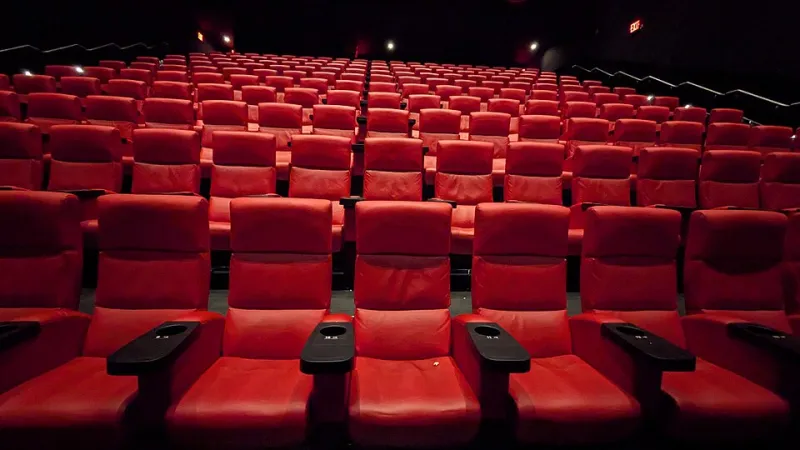
Photo: Eden, Janine and Jim from New York City, CC BY 2.0, via Wikimedia Commons
There's a moment I've started calling the trailer sigh. It happens about ninety seconds in, when you realize the studio has just shown you the entire emotional arc of a movie you were planning to see anyway. The plot twist? Telegraphed. The big set piece? Already watched it three times from three different camera angles. The needle drop that's supposed to feel like a revelation? You've been humming it since Tuesday.
We've all felt it. The question is why we keep letting it happen.
A Brief History of the Hard Sell
Trailers weren't always like this. The first ones, back in the 1910s, were literally thrown together by theater managers — one early example famously ended with the on-screen question, 'Come and see the picture for yourself.' Imagine that. A trailer whose entire selling point was withholding information.
For decades, the trailer stayed roughly in that lane: a mood, a hook, a voiceover guy telling you that 'in a world' something was about to happen. Then came the late '90s and early 2000s, when trailer editing became its own art form — and its own industry. Companies like Buddha Jones and AV Squad turned the two-minute preview into a precision-engineered emotional rollercoaster. Great work, honestly. Some of the best editing in Hollywood happens in trailers. But somewhere in that professionalization, the mandate shifted from 'make them curious' to 'make them certain.'
Certainty sells tickets. Curiosity is a gamble. And studios, especially on nine-figure productions, do not like gambles.
The Teaser for the Teaser Era
We've now reached the logical endpoint: marketing materials about marketing materials. A studio posts that a teaser drops Thursday. Then a ten-second 'sneak peek' Wednesday. Then a poster Tuesday. By the time the actual trailer arrives, you've consumed more of the movie's atmosphere than the movie itself would have provided in its first twenty minutes.
The final trailer is the worst offender. It's the last chance to convert the hesitant, so studios load it with the film's best jokes, its biggest reveals, its most jaw-dropping effects shots. Watch enough final trailers and you can reconstruct a movie like a jigsaw puzzle from the box lid. I've walked out of comedies knowing every laugh was pre-spent, and action movies where the only surprise left was the order of the scenes.
There's even research to back the gut feeling here. Studies on spoilers — including a well-known UC San Diego paper that found spoiled stories are often enjoyed more — get cited constantly in these debates. But that research is about prose, about knowing an ending. A trailer doesn't spoil an ending; it spoils the experience of discovery, and that's a different animal. Anticipation is part of the product. Trailers keep selling us the ticket while quietly refunding the anticipation.
The Case for Trailer-Lite
So here's my modest proposal, and I've been living by it for about two years: watch one trailer, max, and skip everything after that. Better yet, watch only the teaser and stop. If a movie's got my attention from a poster and a premise, that's enough.
The results have been genuinely great. Films I might have shrugged at hit harder. The first act of a thriller actually thrills. I've had two genuine 'wait, WHAT?' moments at the movies in the past year, and both were in films whose marketing I'd deliberately dodged. That used to be a normal moviegoing experience. Now it's a lifestyle choice.
Is it inconvenient? Sure. You have to look away when the trailer plays before another movie, mute the autoplay on YouTube, scroll fast past the Twitter clip. It's a small tax on your attention. But compare that to what you get back: the ability to be surprised by a movie again.
What Studios Could Do (If They Wanted To)
I'm not naive — trailers exist to sell tickets, and spoiler-laden marketing works. But some studios have proven there's another way. A24's teaser campaigns often lean on a single image and a date. Christopher Nolan's team famously keeps plot under wraps so thoroughly that even the trailers are mostly vibes and IMAX cameras. Horror directors like Jordan Peele have built entire films around twists that marketing somehow preserved.
It can be done. It just requires treating the audience as something other than a conversion rate.
Until then, the choice is ours. The lights go down, the trailer rolls, and you have maybe two seconds to decide whether to look. Take it from a reformed trailer addict: the less you know, the better the movie. The best seat in the house isn't the one with the good sightline — it's the one where you genuinely don't know what's coming next.